
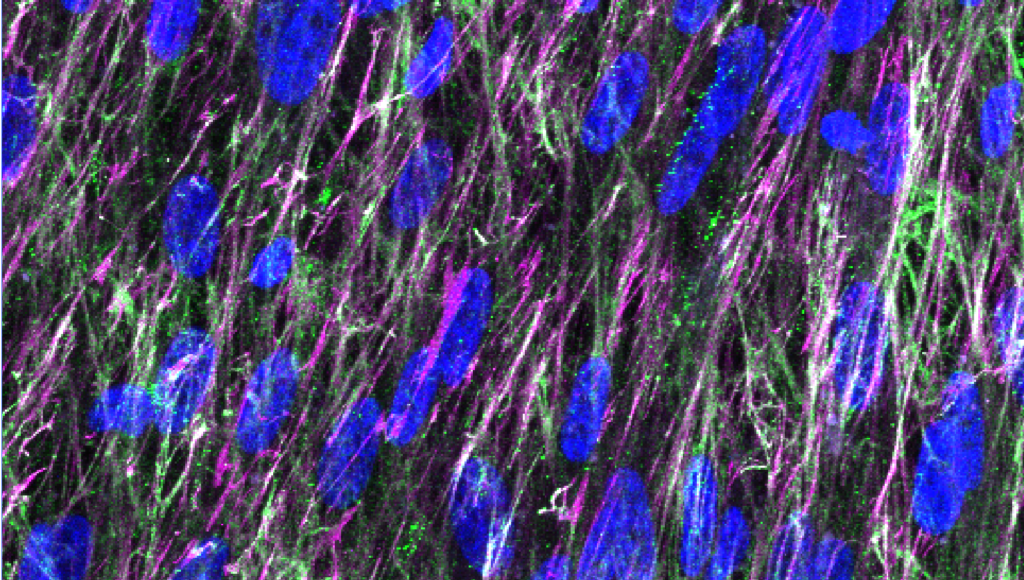
Our Research
In mammalian cells approximately one third of proteins pass through the secretory pathway, a manufacturing system consisting of the endoplasmic reticulum and Golgi apparatus. As they do so they are carefully folded, cleaved and post-translationally modified to regulate their function. The enzymatic contents and structural organisation of secretory pathway organelles, as well as inter- and intra-organelle transport, regulate where proteins are transported and how they are modified. However, what regulates organelle structure and function is poorly understood. Our group aims to address this gap in our knowledge by determining the impact of different physiological and environmental factors on secretion.
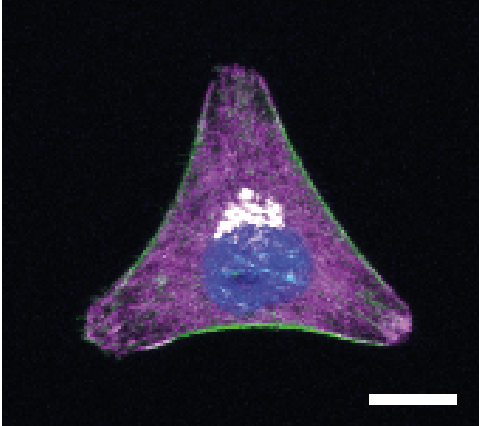
Mechanical regulation of the secretory pathway
Cells are constantly exposed to mechanical forces and must sense these cues so that they can adapt to changing conditions like activity, injury and disease. In this project, we are investigating how mechanical signals affect the secretory pathway, with a particular focus on Golgi structure and function. By exposing cells to defined mechanical environments, we aim to understand the extent to which membrane trafficking is mechanically regulated using light and electron microscopy, trafficking assays and ‘omics approaches.
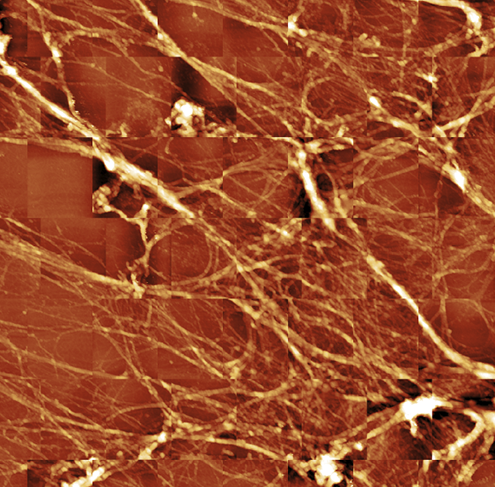
Circadian regulation of the extracellular matrix
Most processes in our body follow a 24 hour rhythm in-tune with the sun. This circadian rhythm allows us to optimise functions across the day – for example increasing metabolism during the day when we are active and repair pathways during the night when we are at rest. Disruption to this rhythm, such as occurs during aging or shift working, reduces organ and tissue performance and can eventually lead to disease. In this project we are focussing on how disruption to the circadian clock impacts secretion and assembly of the extracellular matrix – the protein scaffold forming the structural basis of tissue.
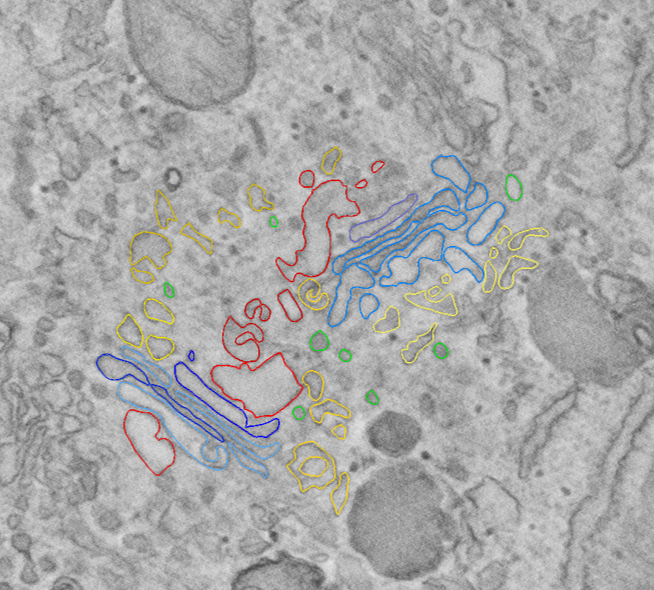
Golgin tethers and Golgi organisation
Protein movement through the secretory pathway relies on transport carriers that selectively package cargo in one compartment and deliver it to the next. Their accurate delivery depends on membrane tethers that recognise and capture carriers destined for specific organelles. This project aims to better understand these dynamic transport systems by focusing on the golgin family of tethers at the Golgi. We are using both in vitro cell models and in vivo systems to dissect how different golgins coordinate membrane traffic and maintain secretory pathway organisation..